
More Than Wins: What the Cubs’ Offseason Says About Their Brand
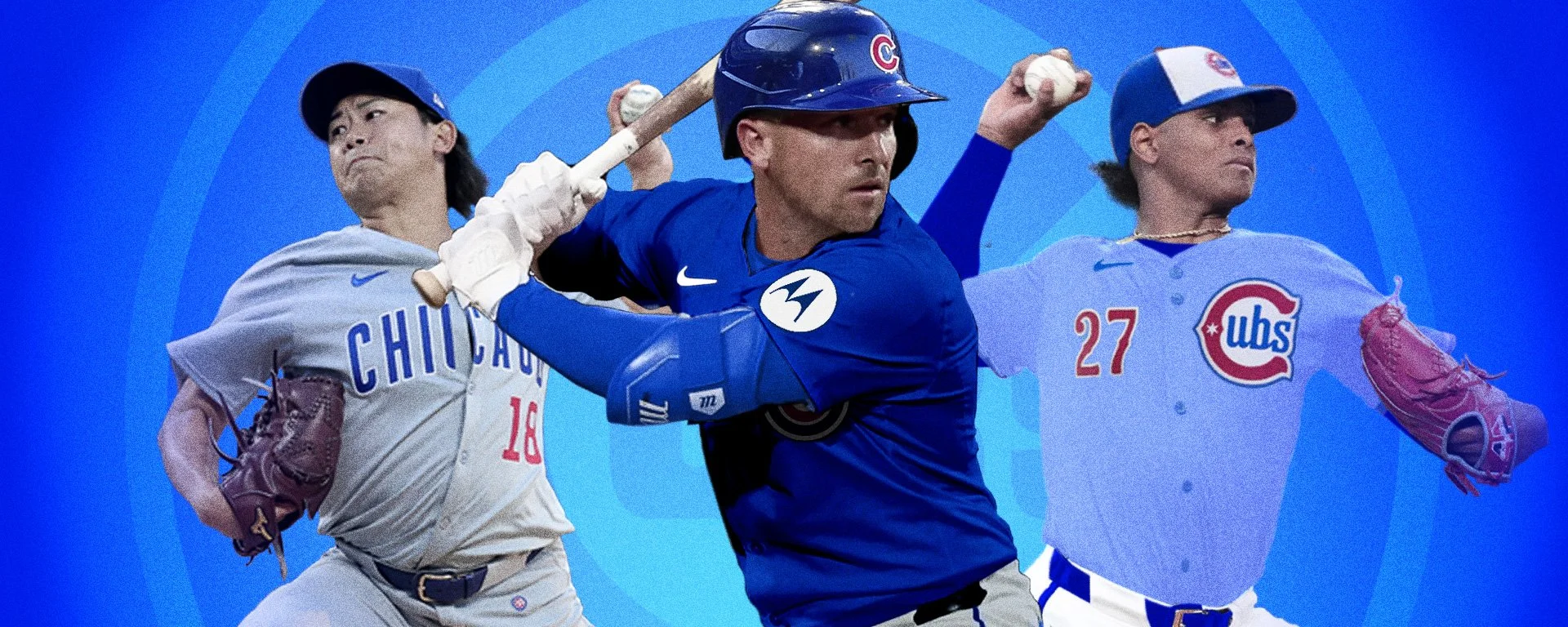
Designed by Kip Rohrer
I’ve been a Chicago Cubs fan for as long as I can remember. I'm born and raised in Atlanta, and every year when the Cubs come to play the Braves, I'm there in the stands. For a long time, 75 percent of my shirts were Cubs-themed—it was almost a joke. I was even in the crowd outside Wrigley Field when the Cubs won the World Series in 2016 (hard to believe it's been 10 years already). The Cubs have been a backdrop to my life.
Because of that, I’m quite aware of how easy it is to talk about the Cubs in extremes. Every offseason becomes a referendum. Every signing is judged at the outset as a boom or bust. It’s a cycle that fans know all too well, especially after 2016, when expectations became permanently warped by both success and the way our promised dynasty came to an end.
This essay isn’t a prediction for the 2026 season. I’m not here to project win totals or to grade the Cubs' moves this offseason, even though I genuinely believe the Cubs are positioned to fare very well, and will probably go deep in the playoffs. But instead, I'm writing this essay to talk about the Cubs' image—about what these moves say about who the Cubs want to be in 2026 and beyond.
Because sports teams don’t just build rosters, they tell stories about themselves. And this winter, the Cubs have been telling a surprisingly coherent one.
Reframing the Offseason
Front offices will tell you that wins are the only thing that matters, and it may seem that branding, image, and fan perception are merely an afterthought. But in reality, fans experience teams long before October. We consume press conferences, trade rumors, social media posts, and legacy player appearances. We react to what a franchise seems to value: patience or urgency, loyalty or churn, stability or chaos. Even when we personally don’t consciously frame it this way, we’re reading the signals. Every team knows this, including the Cubs.
Think about it. To give a couple of chaotic examples—it's the reason the Seattle Mariners' President resigned in 2021 after he revealed in his Zoom call with his Rotary Club, among some other very questionable comments, that team finances were priority over winning. It's the reason there was so much outrage over the A's leaving the Bay Area. No one liked that stadium, or the area, and the front office was dealt a bad hand in that situation; but maybe if they put a winning product on the field, or at least tried to look like they want to win, they could've been spared some fan backlash. These sorts of PR disasters shatter the image of a baseball team and alienate fanbases. In short, it’s bad business.
But for the Cubs, aside from the potential on-field success in 2026, this offseason works because it’s legible. The moves make sense together. They don’t contradict one another. They don’t feel like a panic response to a one-off bad stretch or an overcorrection born of social media pressure. That certainly has been the case in the past: signing Alfonso Soriano, Milton Bradley, and Jason Heyward, to name a few examples. They were signed to outrageous contracts, and were presented to the fan base as game-changers, the missing pieces that were going to turn the tide for the team.
The last few offseasons, however, including this one, point toward something more subtle: a team that wants to be taken seriously again without losing its humanity. A team that understands budget constraints without hiding behind them. A team that wants fans to believe not just that it can win—but that it knows how, and that it is taking steps to do so.
That’s the frame every move this offseason fits into.
Imanaga, Identity, and Global Appeal
If this offseason has a heart, it’s the decision to bring back Shota Imanaga.
Some fans might say it was an obvious move to resign him, but others like myself would have pointed to his decline in performance after the All-Star break last season to say otherwise. After a lights-out 2024, hitters adjusted, and his dominance cooled. As widely noted, his problem was keeping the ball in the park—he gave up 20 home runs in the second half, compared to 11 in the first half. That amounted to 4 more total home runs given up in over 20 fewer innings compared to 2024. A cold, transactional front office might decide to move on from a player like that, especially a 32-year-old player who's spent the majority of his career playing in Japan.
But a brand isn’t built on spreadsheets alone. Imanaga mattered to people. He arrived in Chicago, not just as a solid pitcher, but as a big personality. He was joyfully himself in a way that felt refreshing, and that matters more than teams often admit. From 2015 to 2020, Cubs fans showed up to watch Anthony Rizzo, Kris Bryant, and Javy Baez, not just for their bats, but because they were clearly having fun winning games. That resonates with fans. Shota Imanaga brings his own flavor of that joy back to Wrigley. Not to mention that he shares a clubhouse with Pete Crow-Armstrong. Their goofy “Step Brothers” chemistry gives the team something it’s been missing: levity. They're serious and talented ballplayers, but they also recognize that they get paid big money to play a game, something that the vast majority of us never get to do, and that joy shines through. This isn't forced marketing. It's organic, and fans have responded because it feels natural and earned.
Bringing back Imanaga is also indicative of the Cubs’ increasingly global face. Having a Japanese player carry weight within the organization isn’t just good baseball—it’s good branding. It signals openness. It widens the circle of who the Cubs are for. Wrigley Field has always been a destination, and having Imanaga pitch there increases the potential for it to be an international destination. It's a page right out of the Dodgers' playbook. In order to cater to the popularity of players like Shohei Ohtani and Yoshinobu Yamamoto, the Dodgers are serving Japanese food at Dodger Stadium, putting signage in Japanese, offering stadium tours in Japanese, and so forth. The Cubs have similar opportunities, considering Imanaga's popularity with fans. And playing the Tokyo Series against the likes of Ohtani and Yamamoto last season just might've gained some new Cubs fans in Japan.
There’s also something deeper happening here. The Cubs didn’t just retain a useful arm, they reinforced an identity. Imanaga represents continuity. He represents belief in adaptation rather than abandonment. That sort of loyalty resonates well with fans. It offers hope, a sense of belonging, perhaps even family. It's the reason fans were craving for the front office to bring back Anthony Rizzo for his final season. It's the reason that years ago, they were pining for Ryne Sandberg to be the manager. Fans want to feel connected to the team and to their favorite players.
In choosing Imanaga, the Cubs chose connection. It's sentimental, but it's also strategic.
Bullpen Depth as Brand Positioning
After re-signing Imanaga, the Cubs signed a string of middle relievers. If you saw the comments on all of those articles and posts, you saw many Cubs fans scratching their heads - wondering why the team wasn't being more aggressive in going after a bat or an ace. It's understandable—no one buys a ticket because a team signed a middle reliever. No kid wears a Phil Maton jersey to school. And yet, some of the most important branding work a franchise can do happens in these quiet margins.
The Cubs’ bullpen additions—Phil Maton, Hunter Harvey, Jacob Webb, Hoby Milner, and the re-signing of Caleb Thielbar—aren’t headline moves. They’re not meant to be. What they are meant to be is a signal that the team is serious about winning. For years, the Cubs’ bullpen has felt like a patchwork solution, something addressed reactively rather than proactively. And when saves get blown and leads get lost in the seventh, that erodes trust. Fans don’t need to know every advanced metric to feel when a team is cutting corners.
This winter has felt different. The month of December was a deliberate push to increase depth, and it sent a clear message to fans. It was a message from the front office acknowledging that games are often decided in the last few innings, not in the first few. From a branding perspective, this is the Cubs positioning themselves as competent adults in the room. Not flashy. Not desperate. Just prepared. It says: we know where we failed, and we fixed it without making a spectacle. That kind of confidence resonates, even if it takes a while for others to notice.
Why Indulgence Matters
Not all good branding is restraint. Sometimes, you need a moment that feels indulgent. And over the last week, the Cubs had two of those moments.
The Edward Cabrera Trade
Trading for Edward Cabrera addressed one of the Cubs' biggest needs right now in a top-of-the-rotation starter, and it was addressed in grand fashion. It was bold without being reckless. The Cubs gave up real prospect capital in Owen Caissie and Cristian Hernandez (now the Marlins #3 and #12 prospects, according to MLB.com), and that’s not insignificant. But this wasn’t a move born of impatience. It was a declaration of timing.
The trade pacified a lot of fans who wanted the team to go after the likes of Zac Gallen and Dylan Cease. Cabrera can provide similar value, and in fact provided more value than both Gallen and Cease combined last season (2.8 WAR vs. 1.1 WAR each, according to Baseball Reference). Both of them will be 30 this season as well, while Cabrera is turning 28. Are Gallen and Cease regressing? You could argue that they just had down years, but their age is curious.
Cabrera represents upside with immediacy. He’s not a lottery ticket. He’s not a five-year-away projection. He’s a bet that the Cubs believe they’re ready to support now. Some fans believe they might've been better off keeping Caissie and perhaps waiting a little longer on Hernandez, even though he's been somewhat disappointing in the minors so far. However, this is a message that the Cubs are looking to win now, and they're confident they can do so. From a brand standpoint, this matters because it reframes the Cubs’ relationship with prospects. They’re no longer hoarding value for a future that never quite arrives. That's not to say that they're not still building up their farm system—they currently have 2 of the top 100 prospects in Moises Ballesteros and Jaxon Wiggins—but they’re using the farm for what it's for, building winning teams.
That shift, from potential to presence, is the difference between rebuilding teams and contenders who understand their window.
The Alex Bregman Signing
This is the move that really changes the temperature of the room. Fans have been crying for this signing for a couple of years now. Bregman isn’t just productive; he’s credible. He brings a seriousness that reshapes a lineup simply by existing in it. Forget Trash-Can-Gate—Bregman has proven over the last 4 seasons that he doesn’t need to hit 40 home runs to justify the money the Cubs gave him. His value is in at-bats that matter. He's averaged 4.2 WAR (Baseball Reference) since 2022, and 4.8 per 162 games. He may be 32 now, and he may decline over the course of this contract, but he's shown that he's consistent enough to justify another couple of good, even great years.
Just as importantly, the structure of the deal matters. $30M a year. Full no-trade clause. No opt-outs. There's no sense that he’s using the Cubs as a layover. This was a grown-up signing. The Cubs showed that they want Bregman. Yes, there's deferred money, which the Cubs swore off, but it's nothing the front office can't handle. This gives the Cubs some wiggle room to make some more moves as needed throughout the year. And with Bregman surely becoming the starting third baseman, it looks like Matt Shaw most likely will be traded. There's a lot of Shaw fans out there, but if he were traded, then if anything, it'd be another sign of confidence in the Cubs' playoff chances this year, and in Bregman himself.
Some probably would have preferred that the Cubs either re-sign Kyle Tucker, or otherwise go after someone like Kyle Schwarber, Pete Alonso, or even Bo Bichette. But Bregman represents a unique middle ground between those options: similar overall production without the long-term risk, financial volatility, or roster distortion that the others would have introduced. Tucker, Schwarber, and Alonso would have required the Cubs to further clog an already crowded DH and corner-outfield picture, while Bichette’s rumored price tag would have demanded a level of commitment that didn’t align with the team’s broader financial and competitive goals. If the Cubs could get comparable impact, steadier two-way value, and contractual flexibility for less money and less structural disruption, Bregman was simply the most rational choice.
Another thing about Bregman (like Kyle Tucker before him, and Cody Bellinger before him) is that he's squeaky clean, even downright boring—something the Cubs front office has shown that it loves. A lot of baseball fans give Bregman flak for being a part of the 2017 Astros team, understandably. But in all honesty, in the wake of the scandal, he might've looked the most uncomfortable, the most remorseful, and in hindsight, perhaps the most innocent of that Astros team; and he's owned it pretty well, all things considered (whether he benefited from the Astros cheating scandal is irrelevant at this point). He doesn't cause trouble. In the past, the Cubs have invited the ire of the fans by keeping a trouble-maker in the clubhouse—for example, Sammy Sosa, Kyle Farnsworth, Carlos Zambrano, and Milton Bradley. Those examples were all under previous ownership, and the Ricketts family seems intent on maintaining a clean, if unexciting, image for the fans at large, which comes down to the players they acquire. It shows even in how long it took for them to welcome back Sammy Sosa to Wrigley, who never played one game under the Ricketts family ownership.
For a franchise that has occasionally felt stuck between austerity and ambition, Bregman is a reminder that star power doesn’t have to mean chaos. You can add a marquee name without losing control of the narrative.
How This Offseason Serves the Cubs’ Core Brand Goals
When you step back, the cohesion becomes clear. What makes this offseason feel different isn’t any single transaction, but how cleanly the individual moves ladder up to the Cubs’ broader goals as an organization. Nothing feels accidental. Nothing feels like it exists in isolation. Each decision looks like a part of the ecosystem, and each decision reinforces the others, creating a version of the Cubs that is easier to understand—and easier to believe in.
The Bottom-Line
The Cubs haven’t blown past the budget this offseason, nor have they hid behind it—a welcome change. The team has been accused in recent years of being cheap, with a few exceptions like signing Craig Counsell. That’s by design. The Cubs have other financial goals from winning baseball games—most notably the stability of their regional Marquee Network TV deal, sustained ratings, and the continued development of the Wrigleyville ecosystem, where packed streets, full restaurants, and year-round foot traffic are just as critical to the bottom line as the on-field product.
It's true, they've finally opened up their checkbook for Bregman, but his contract was reasonable. The way the team has spent its money on players the last few years, however, points to a front office that understands how quickly a payroll can become a constraint, keeping them from fulfilling other business goals if emotion drives spending. This isn’t thrifting, it’s sound business sense paired with confidence. The Cubs are behaving like a team that knows it doesn’t need to win the offseason to win trust. In doing so, they are reinforcing an image of stability—one that suggests future moves are possible because this winter didn’t mortgage tomorrow for today.
Image
For much of the post-2016 era, the Cubs have struggled with perception. At times, they've felt passive. At other times, reactive. Even when those labels weren’t entirely fair, the lack of a clear throughline made it easy for fans to project frustration onto the front office, interpreting inaction as apathy and course-correction as panic rather than strategy—for example, oscillating between selling off core pieces one year and then handing out large, long-term contracts the next, without a clearly articulated competitive timeline to connect those decisions. The fire sale in 2021 was heartbreaking to say the least, and the signings of Dansby Swanson, Cody Bellinger, and Seiya Suzuki in 2022-2023 were promising, but they didn't totally address all of the needs of the team at that time. Whatever the real story was behind the scenes at the time, this offseason has actively pushed back against the narrative that the front office is apathetic. Even if the team has always been working toward success, at least now, the fans feel like the team feels intentional again—focused, decisive, and aligned around a clear internal vision.
Importantly, this wasn’t accomplished through one splashy signing meant to dominate the news cycle. It was achieved through consistency. The Cubs addressed weaknesses they acknowledged. They didn’t chase big names just because the fans wanted it or overcorrect for past mistakes. That kind of coherence rebuilds credibility not just with fans, but with players, agents, and the league at large.
Fan Engagement
Engagement isn’t just about winning, though winning certainly amplifies everything else. It’s about emotional access. The Cubs leaned into familiarity this offseason—keeping faces fans already care about, while adding personalities that feel additive rather than disruptive.
By embracing players with visible character and by avoiding faceless roster churn, the Cubs made it easier for fans to invest emotionally as well as intellectually. Following a team requires energy—time, attention, and a willingness to care. Last season, for the first time in a while, the roster felt worthy of that investment rather than demanding it out of habit or loyalty, and this season feels even more so. It invites curiosity instead of skepticism, encouraging fans to learn who these players are and how they fit together, which is no small thing after years of guarded optimism and cautious detachment.
Relationship with Chicago
There’s a civic layer to all of this, too. The Cubs are more than a baseball team—they’re a cultural fixture. Wrigley Field itself is a national landmark. The team's continued success, whether on or off the field, affects the rest of the city—tourism, the economy, and even the health of entire neighborhoods around Wrigley. When the Cubs are competitive, hotels fill up for weekend series, bars and restaurants in Wrigleyville stay busy deep into September, and the area feels alive in a way that ripples far beyond the ballpark gates. To be fair, Wrigley Field sells out even when the Cubs are bad, but not for too long. This offseason is finely attuned to that reality. The roster reflects qualities Chicago tends to value: pragmatism, resilience, consistency, and even fun.
Even more so than simply putting a winning product on the field, there’s a sense that the Cubs are trying to reflect the city of Chicago rather than simply operate within it. That connection matters, especially for a franchise whose identity has always been tied as much to place as to performance. It shows that the team knows its fans—its target market—and it shows that the teams knows who and what their fans care about.
Team Success
It may seem obvious, but ultimately, a winning baseball team fuel everything else in the ecosystem. Branding without substance collapses under pressure, and no amount of narrative can survive sustained losing. That goes for any brand. Apple ultimately wouldn't sell any iPhones if they weren't a legitimately good product, and Starbucks wouldn't sell any coffee if it didn't actually taste good. In the same way, the Cubs couldn't have built big hotels and fancy restaurants outside the stadium if it weren't for the front office putting good teams out on the field over the last several years. So while this essay isn’t necessarily a prediction for this season, it’s difficult to ignore that the roster now supports the image being presented.
Right now, the competitiveness of the Cubs' roster isn't just talk—which admittedly the team has been guilty of in the past. The Cubs look genuinely dangerous. So the branding isn’t aspirational or theoretical. It’s backed by decisions that make baseball sense. And when image and performance point in the same direction, belief becomes easier to sustain.
What the Cubs Are Saying Without Saying It
No team can say for certain that they'll win the World Series, and the Cubs are no exception. The offseason is far from over, and the Cubs may make some more moves between now and Opening Day, but they've already sent a strong message to the world. They've told the world that they're pushing for October, but they've also told the world that they aspire to be an organization built on competence, consistency, trust, loyalty, adaptation, innovation, and above all, a love for the game of baseball.
For a fan base that has lived through both miracles and mismanagement, that matters. Because belief isn’t built overnight. But when you put the work into your brand the way the Cubs have, you build a strong ecosystem.
The Cubs have made a lot of noise with the acquisition of Edward Cabrera and Alex Bregman. But noise wasn't the goal. The goal is wins, but with a view to strengthening the brand. And moves like the ones this offseason build trust, and that trickles to all other aspects of the brand. And in the long run, that may be the most important win of all for a baseball team.
